


⸻
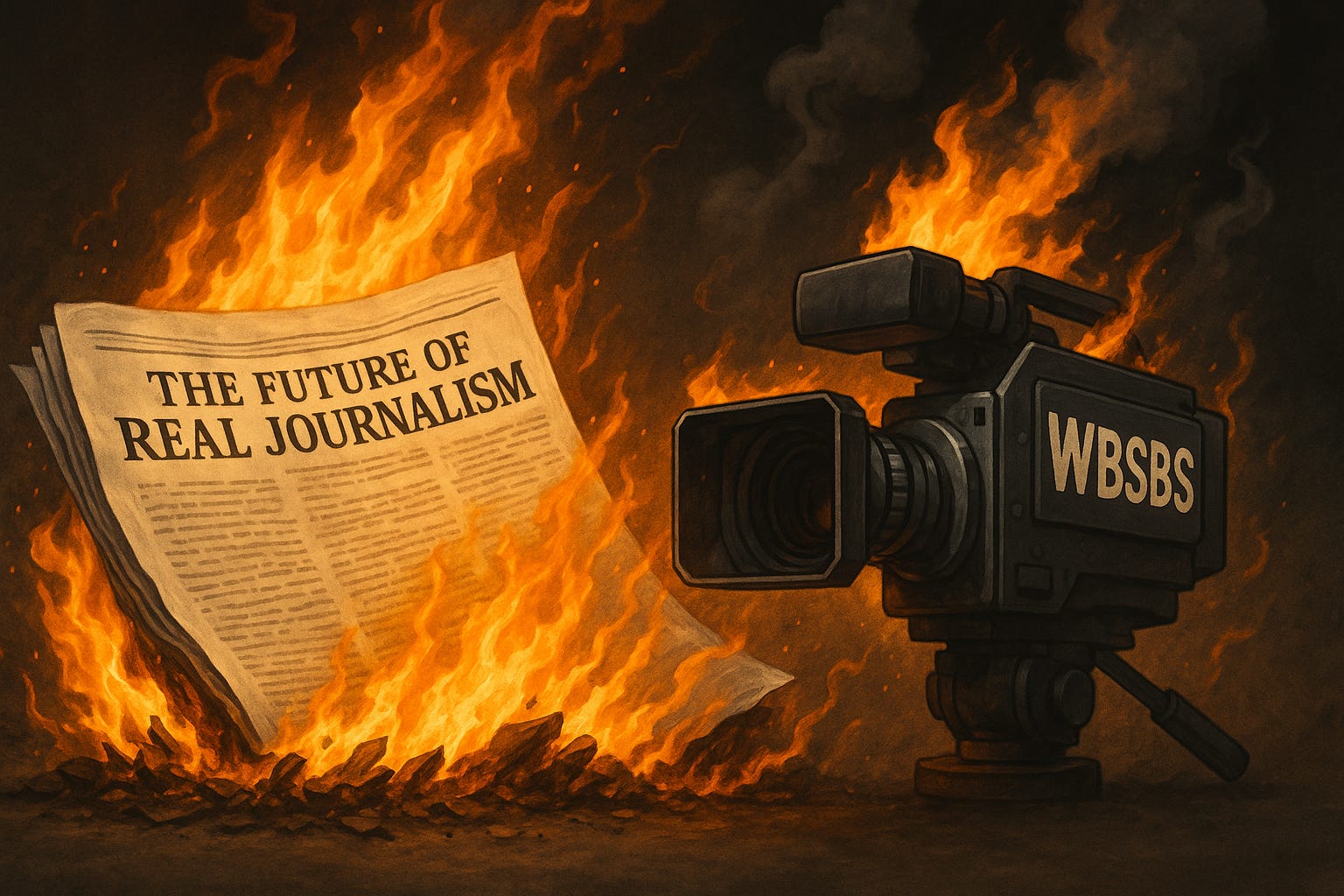
The future of journalism didn’t arrive with fanfare — it broke out through the cracks.
While legacy networks chased clicks, ad dollars, and fear headlines, real stories started to flow through podcasts, Substack newsletters, and creators who refused to play by the algorithm’s rules.
When YouTube shadow-banned my channel, they thought they were silencing a small voice.
Instead, they created a network — 35,000+ readers and counting — who don’t need permission to know what’s real.
This week, gold and silver roared back to life. The same system that tried to suppress independent journalists has been trying to suppress honest markets for decades. Both are breaking free.
📘 If you want to understand the forces behind this shift, read The World According to Martin Armstrong — a map for navigating truth in a world built on managed perception.
⸻
💀 The Fall of “Approved Narratives”
Journalism used to be about what happened.
Then it became about what should be believed.
That subtle shift — from reporting to programming — is why trust collapsed.
Every time a story gets tagged as “misinformation,” someone’s truth gets deleted.
Every time a headline gets rewritten to fit the advertiser’s comfort zone, another reader walks away for good.
The problem isn’t the journalists on the ground. It’s the machinery above them — the publishers, platforms, and “trust & safety” departments deciding what counts as real.
⸻
🧭 The Rise of the Decentralized Journalist
Today, real journalism lives where censorship doesn’t.
It’s happening on Substack, Rumble, independent podcasts, and newsletters like this one.
It’s powered by individuals — not corporations — and amplified by audiences who know when they’re being lied to.
AI has changed the landscape too. But instead of replacing journalists, it’s exposing manipulation faster than editors can bury it. Every time a platform tweaks its algorithm, another independent mind reverse-engineers the truth.
⸻
🛡️ The New Immune System of Truth
Big Tech can’t touch this — not anymore.
The moment they try, they’ll face thousands of independent journalists calling them out in real time.
People like Matt Taibbi, Glenn Greenwald, Bari Weiss, Michael Shellenberger, Saagar Enjeti, Tucker Carlson, Alex Berenson, and Seymour Hersh — and tens of thousands of smaller creators who now wield more influence and credibility than the combined collective of big journalism’s remaining newsrooms.
That’s the beauty of decentralization.
There’s no single lever left to pull.
No headquarters to raid.
No “trusted flagger” system that can throttle everyone at once.
The power of the press finally belongs to the pressers, not the platforms.
They tried to algorithm us into silence.
Instead, they created an army of voices who learned how to speak louder — and smarter — than the filters.
⸻
⚙️ What Comes Next
