


One of my favorite travel secrets costs absolutely nothing. And few travelers even know it exists.
There are few experiences more aggravating than trying to get into a major airport during rush hour. You’ve allowed plenty of time, your flight is on schedule, and everything is going beautifully until you get within a mile of the terminal. Suddenly, you’re staring at an endless procession of brake lights, watching your departure time creep closer while a thousand other drivers attempt to squeeze into the same three lanes. At JFK, the Van Wyck Expressway can make you question every decision you’ve made in your life. At O’Hare, the Kennedy Expressway can turn a perfectly pleasant afternoon into an endurance test. And once you finally reach the terminal, you’re greeted by airport traffic cops blowing whistles, waving their arms and treating every driver like a fugitive from justice.
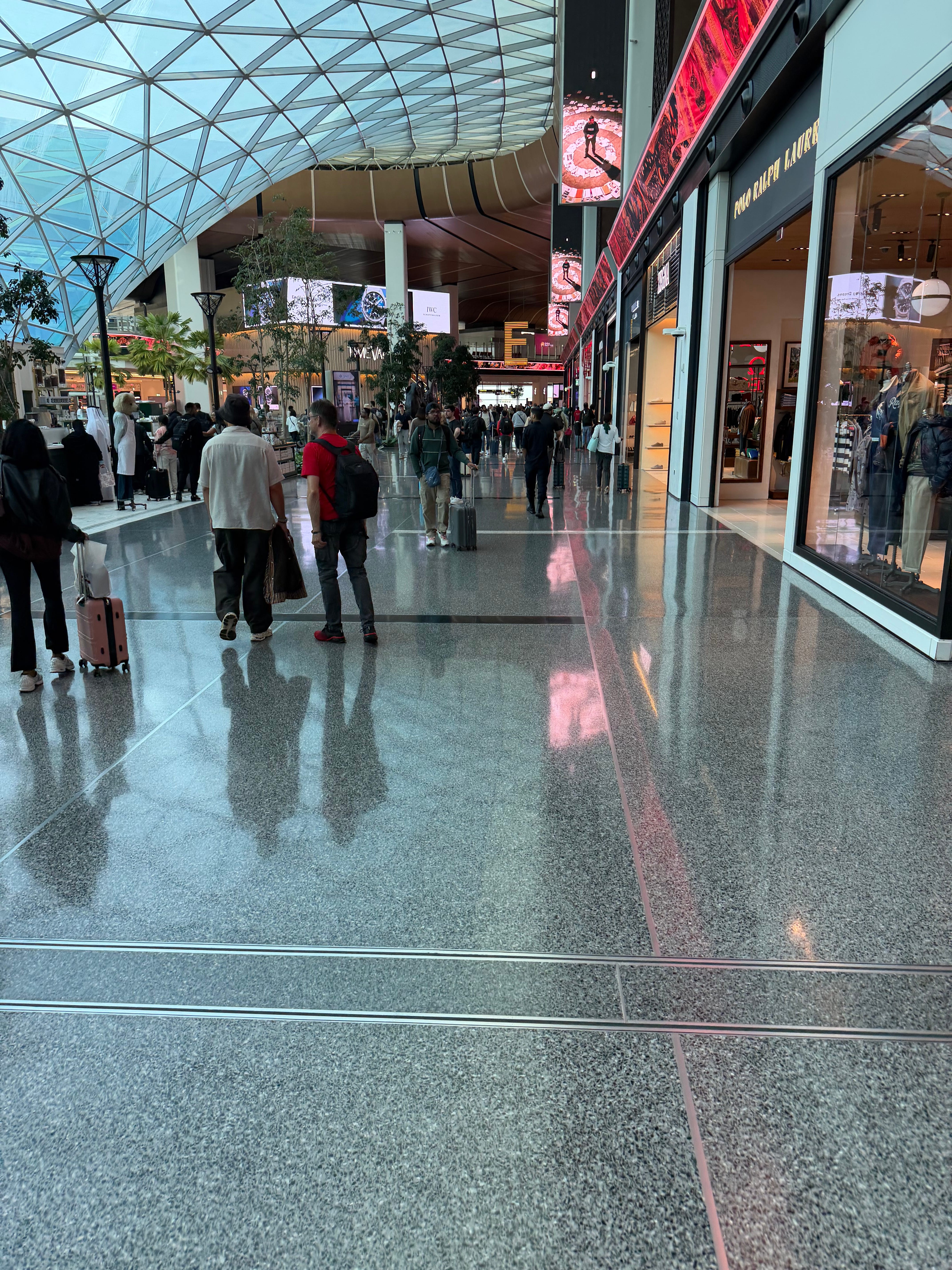
I’ve been traveling extensively for decades, and somewhere along the way I figured out something that has saved me countless hours of aggravation. Sometimes the smartest way into an airport isn’t through the main entrance. It’s through the attached hotel. I call it the Airport Hotel Hack, and the best part is that you frequently don’t need a hotel reservation. You don’t have to check in, spend $300 on a room or join another loyalty program. You simply need to know how the airport is laid out and whether its hotel provides an easier route to the terminal.
My Latest Escape: Bangkok
I recently put the system to work at Bangkok’s massive Suvarnabhumi International Airport, one of the busiest transportation hubs in Asia. Anyone who has experienced Bangkok traffic knows that the streets operate according to rules understood only by Thai taxi drivers and possibly divine intervention. The airport departure level adds thousands of passengers, tour buses, taxis, private cars and confused tourists to the equation. I wanted no part of it. Instead of directing my driver to the main departure terminal, I had him take me to the Hyatt Regency Bangkok Suvarnabhumi Airport, formerly the Novotel. The hotel has its own vehicle entrance and connects to the airport through an air-conditioned underground passageway.
My driver pulled up to the hotel, I got out with my luggage, and he was on his way. No competing with tour buses for curb space. No traffic cops telling him to move before I’d even unloaded my bags. I walked through the hotel, took the underground passageway into the terminal and headed for check-in. The walk took a few minutes, but I avoided the departure-level chaos and never had to drag my luggage through the heat. My driver avoided getting trapped in the terminal traffic. That’s what I call a win-win transaction. And here’s the kicker: I wasn’t staying at the hotel. I didn’t need a room, and the shortcut didn’t cost me a dime.
The Hyatt wasn’t some magical exception. I’ve used variations of this approach at many other airports, and there are plenty of hotels where the geography makes it possible. Think about how airports are designed. Millions of passengers funnel through the same arrivals and departures roads, but airport hotels frequently have their own vehicle entrances, underground walkways, pedestrian bridges and elevators connecting them directly to the terminals. Those connections weren’t necessarily designed as traffic shortcuts, but under the right circumstances, that’s exactly what they become. Why voluntarily join the worst traffic jam when there’s another perfectly good way into the building?
At JFK, the TWA Hotel has its own entrance and connects directly to Terminal 5 through the famous flight tubes. Chicago O’Hare’s Hilton connects to Terminals 1, 2 and 3 through underground pedestrian walkways. Detroit’s Westin is built into the McNamara Terminal complex, while the Tampa Airport Marriott connects directly to Tampa’s main terminal. The Grand Hyatt at Dallas/Fort Worth offers another potentially useful alternative at Terminal D. Minneapolis-St. Paul’s InterContinental has its own terminal connection, although there are important restrictions involving checked baggage, security and access hours. These are just some examples of hotels worth investigating before your next flight.
Of course, not every airport hotel works for this purpose. Some share the same traffic-choked entrance as the terminal, others require shuttle buses, and some pedestrian connections aren’t accessible to everyone. Miami’s in-terminal hotel, for example, is convenient for passengers but doesn’t offer the same separate-driveway advantage. The trick is knowing which properties actually offer an alternative rather than assuming that any hotel with the word “airport” in its name will do the job. A little advance research with Google Maps can save an enormous amount of aggravation.
Picking Someone Up? That’s Where It Gets Even Better.
For me, the most maddening airport experience isn’t always departing. It’s picking someone up. You know the routine. Your passenger tells you the plane has landed. Twenty minutes later, they’re still waiting for their luggage. You circle the terminal, get stuck behind a shuttle bus, finally find an opening and discover you’re at Door 4 while they’re standing at Door 14. Meanwhile, the airport cop is waving you away as though you’ve committed a major felony. When the hotel is accessible from the public side of the airport and permits pickups, I arrange to meet my passenger there instead. They collect their luggage, walk to the hotel lobby, and let me know when they’re ready. I drive up, they get in, and we’re gone. No circling the arrivals loop, no frantic cellphone conversations and no explaining to an armed airport employee that I’m not attempting to establish permanent residency at the curb.
Over the years, I’ve learned that the best travel experiences rarely come from spending the most money. They come from understanding how things work. Airports are complicated machines, and most people use them exactly as instructed, following the same signs, standing in the same lines and paying whatever they’re charged. I prefer to look for alternatives. The Airport Hotel Hack is one example. Using airline miles and credit card rewards to fly internationally in business class rather than spending 15 hours folded into a coach seat is another. You don’t have to be a millionaire to travel like one. But you do need to learn a few tricks.
Want My Top 25 Airport Hotel Hacks? They’re Yours Free.
I’ve put together a list of 25 airport hotel hacks worth knowing about, including hotels with convenient terminal connections, alternative drop-off locations and potential pickup shortcuts. These are the kinds of travel tricks that can save you time, money and aggravation, especially when you’re dealing with major airports during peak travel periods.
I’ll send you the list absolutely free. No purchase, hotel reservation or subscription required. Just email me at kl@kerrylutz.com with HOTELS in the subject line, and I’ll send you my Top 25 Airport Hotel Hacks. It’s that simple.
And if you want to take your travel game to another level, here’s another one of my favorite strategies. I’ve spent years learning how to use credit card rewards and airline miles to turn ordinary spending into extraordinary travel experiences. Flying Qatar Airways Qsuites halfway around the world is a lot more enjoyable when you’re using miles instead of paying full fare.
If you’re interested in building flexible travel rewards of your own, take a look at this Capital One travel rewards offer. If you take them up on the offer, you get free access to their growing number of airport lounges, another hack I will cover later and you’ll get enough Capital One Reward Points to book your own adventure. I get a few points for sending you their way.
The next time you’re headed to a crowded airport, don’t automatically tell your driver to take you to departures. First, find out whether there’s a hotel with a better entrance. You might discover that the easiest way into the airport is through a door that 99% of travelers never even consider.
And remember, send HOTELS to kl@kerrylutz.com. I’ll send you the list of 25 airport hotel hacks that could make your next trip a whole lot easier.
Sometimes the best way to beat the system is simply to understand it better than everyone else.